Manousos Klados

Manousos Klados

Associate Professor of Psychology

University of York - Europe Campus, CITY College

Biography

Manousos Klados received a BSc in Mathematics, a MSc in Medical Informatics (with distinction) and a PhD in Medicine (with distinction) from the Aristotle University of Thessaloniki in 2007, 2009 and 2014 respectively. He received a postdoctoral fellowship in the Neuroanatomy and Connectivity research group at Max Planck Institute for Human Cognitive and Brain Science from 2014 to 2016, and a senior researcher at the Chair of Lifespan Development Neurosciences at Technical University of Dresden. His tenured carrer has started as a Lecturer with the Department of Biomedical Engineering at Aston University, while he is currently serving as an Assoc. Professor of the Department of Psychology at the University of York Europe Campus, CITY College. He has authored 28 journal articles and more than 30 contributions in international conferences with posters and talks while his research interests include mathematical anxiety, brain networks, affective and personality computing and biomedical signal processing. He has rewarded several prizes and scholarships for his research excellence, while he chaired one international conference (SAN2016) and was on the organization/international committee of several more.

Download my resumé.

Interests
  • Brain Networks
  • Affective Neuroscience
  • Mathematical Anxiety
  • Personality Neuroscience
  • Affective/Personality Computing
Education
  • PGCert in Higher Education, 2019

    Aston University.

  • PhD in Medicine, 2015

    Aristotle University of Thessaloniki

  • MSc in Medical Informatics, 2009

    Aristotle University of Thessaloniki

  • BSc in Mathematics, 2007

    Aristotle University of Thessaloniki

Experience

Experience after PhD



University of York Europe Campus, CITY College
Associate Professor of Psychology
Feb 2020 – Present Thessaloniki (GR)
Teaching of Research Methods, Statistics and Neuroscience


Aston University
Lecturer of Biomedical Engineering
Jul 2017 – Jan 2020 Birmingham (UK)
Taught Software Engineering and Medical Imaging


TU Dresden
Research Consultant
Jul 2017 – Jul 2018 Dresden (D)
Research on the Chair of Lifespan Developmental Neuroscience


TU Dresden
Research and Teaching Fellow
Oct 2016 – Jul 2017 Dresden (D)
Researcher on the Chair of Lifespan Developmental Neuroscience


Max Planck Institute for Human Cogntive and Brain Sciences
Postdoctoral Fellow
Oct 2014 – Oct 2016 Leipzig (D)
Postdoctoral Researcher in Neuroanatomy and Connectivity

Publications

Quickly discover relevant content by filtering publications.
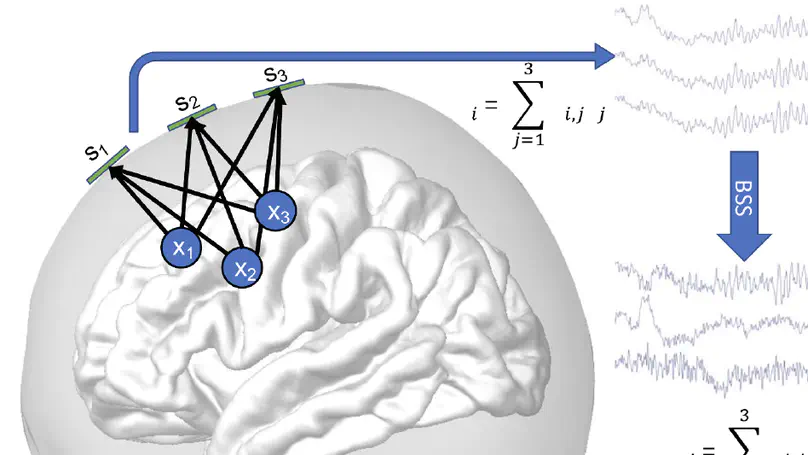
(2022). Which BSS method separates better the EEG Signals? A comparison of five different algorithms. In BSPC.

PDF Cite Dataset DOI

(2021). Mind blanking is associated with a rigid spatio-temporal profile in typical wakefulness. In bioRxiv.

PDF Cite DOI

(2021). Computerized physical and cognitive training improves the functional architecture of the brain in adults with Down syndrome: A network science EEG study. In NetNeur.

PDF Cite DOI

(2020). Consensus on the reporting and experimental design of clinical and cognitive-behavioural neurofeedback studies (CRED-nf checklist). In Brain.

PDF Cite DOI

(2020). Current trends of biomedical signal processing in neuroscience. In IETNeuro.

Cite DOI

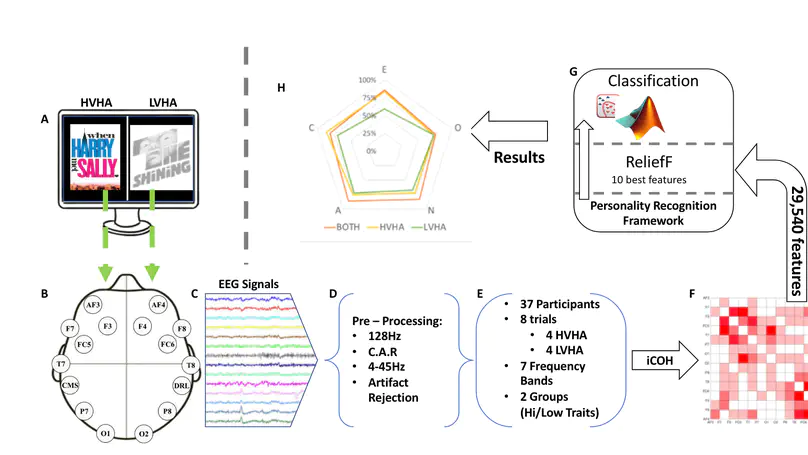
(2020). Automatic Recognition of Personality Profiles Using EEG Functional Connectivity during Emotional Processing. In BrainSci.

PDF Cite DOI

(2020). Double-Step Machine Learning Based Procedure for HFOs Detection and Classification. In BrainSci.

PDF Cite DOI

(2019). Towards a novel way to predict deficits after a brain lesion: A stroke example. In IEEE_BIBE2019.

Cite DOI

(2019). Functional connectivity analysis of cerebellum using spatially constrained spectral clustering. In IEEE_BHI.

Cite DOI

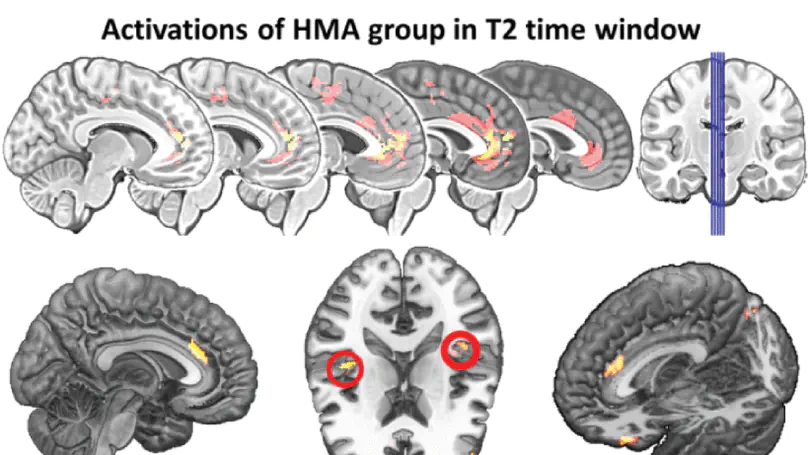
(2019). The impact of math anxiety on working memory: A cortical activations and cortical functional connectivity {EEG} study. In IEEE_Acc.

PDF Cite DOI

Contact